

Thanksgiving Travel Data Shows Mixed Trends in Road Safety
November 3, 2026
Verra Mobility’s 2026 survey shows growing adoption and an opportunity for automakers to deliver useful services built into the driving experience.
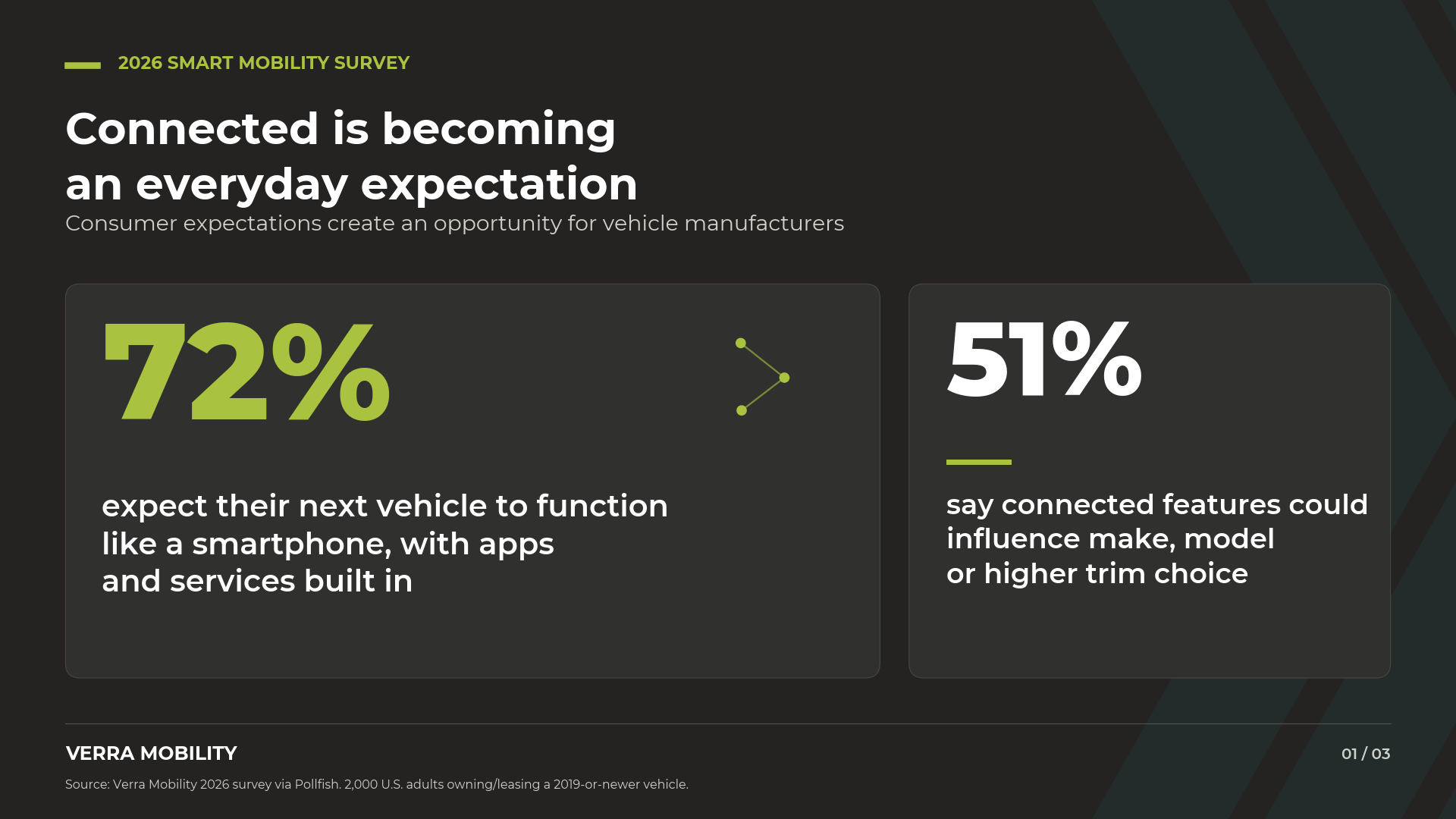
Drivers increasingly expect their next vehicle to offer the connected experiences they already rely on in daily life. In Verra Mobility’s 2026 national survey, 72% of respondents said they expect their next vehicle to function like a smartphone, with apps and services built in.
Those expectations can influence what drivers buy. More than half of respondents, 51%, said connected features would influence them to choose a different make, model or higher trim level. For automakers, the findings point to an opportunity to make embedded services a meaningful part of the vehicle’s appeal.
From available features to everyday use
The latest research builds on Verra Mobility’s 2024 smart mobility survey. Both studies surveyed 2,000 U.S. adults who own or lease a vehicle manufactured in 2019 or later, providing a view of how attitudes toward connected services are evolving.
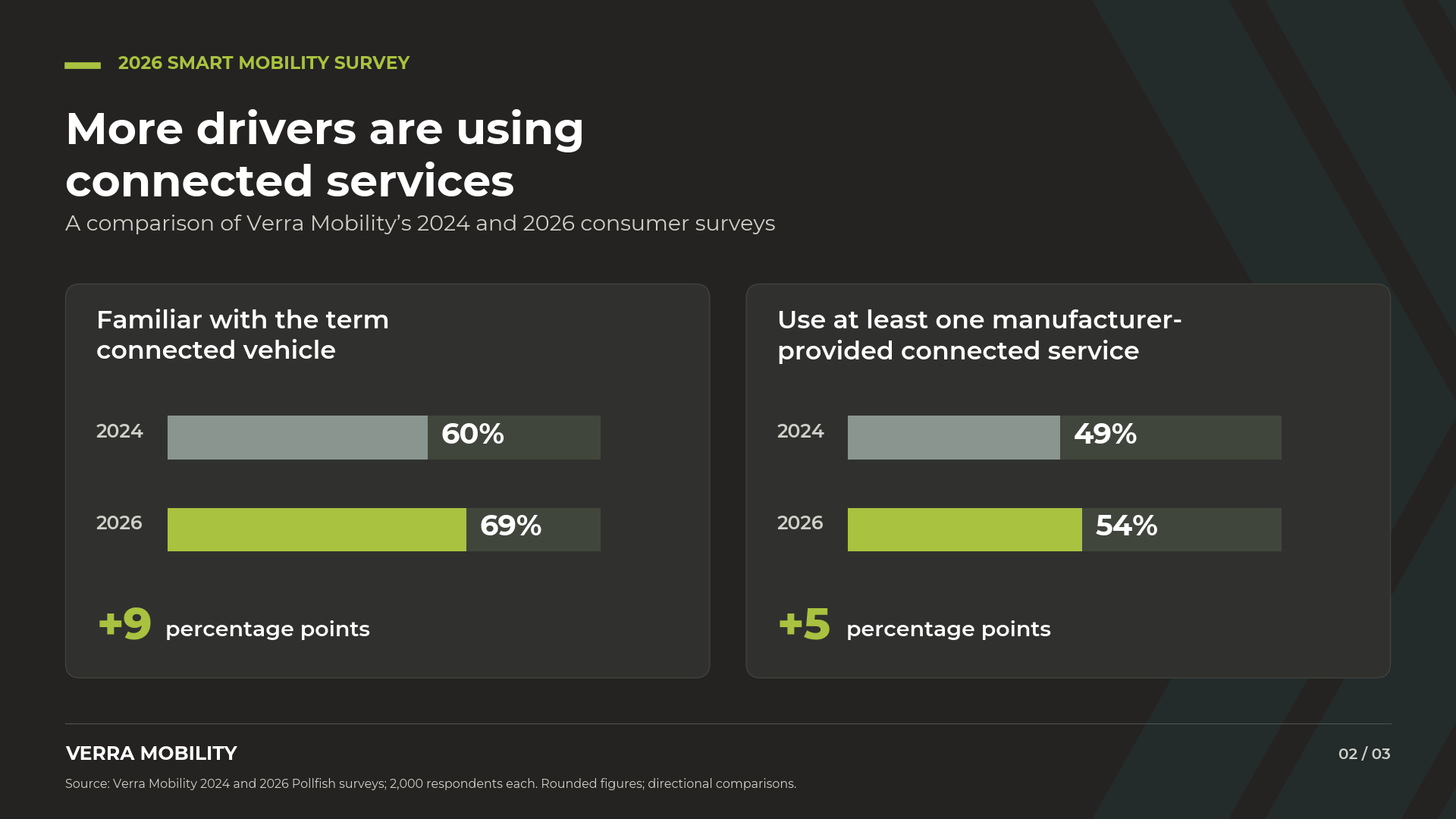
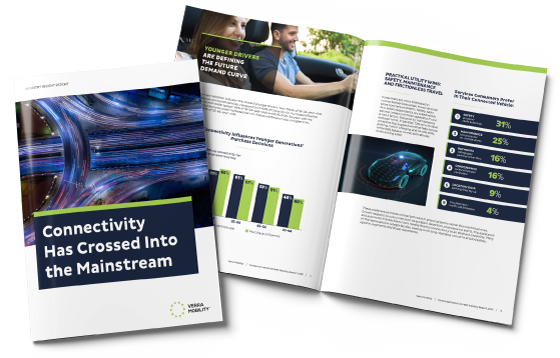
Familiarity with the term connected vehicle reached 69% in 2026, compared with 60% in 2024. Active use also increased: 54% now use at least one manufacturer-provided connected service, up from 49% two years ago. That puts reported use above the halfway mark in the latest survey.
Engagement extends to the vehicle’s own interface. In 2026, 43% of respondents said they had signed up for an app or service through the infotainment system, while 37% had renewed or opted in when prompted. Simple enrollment and clear demonstrations of value can help OEMs connect available capabilities with everyday use.
Younger drivers show what comes next
Connected services are especially relevant to younger buyers. Among respondents aged 18–24, 67% actively use at least one connected service, compared with 44% of those aged 55–64.
The difference also shows up in purchase decisions. Connected features could influence vehicle choice for 69% of respondents aged 18–24 and 65% of those aged 25–34. For automakers planning future experiences, these findings underscore the importance of making useful connected services easy to discover and use.
Embedded convenience is a clear opportunity
Consumers are interested in technology that helps with familiar driving tasks. Seventy-two percent would value proactive trip suggestions for finding parking, locating fuel or charging stations, and handling toll transactions. And 66% would value not having to connect a smartphone every time they get in the car.
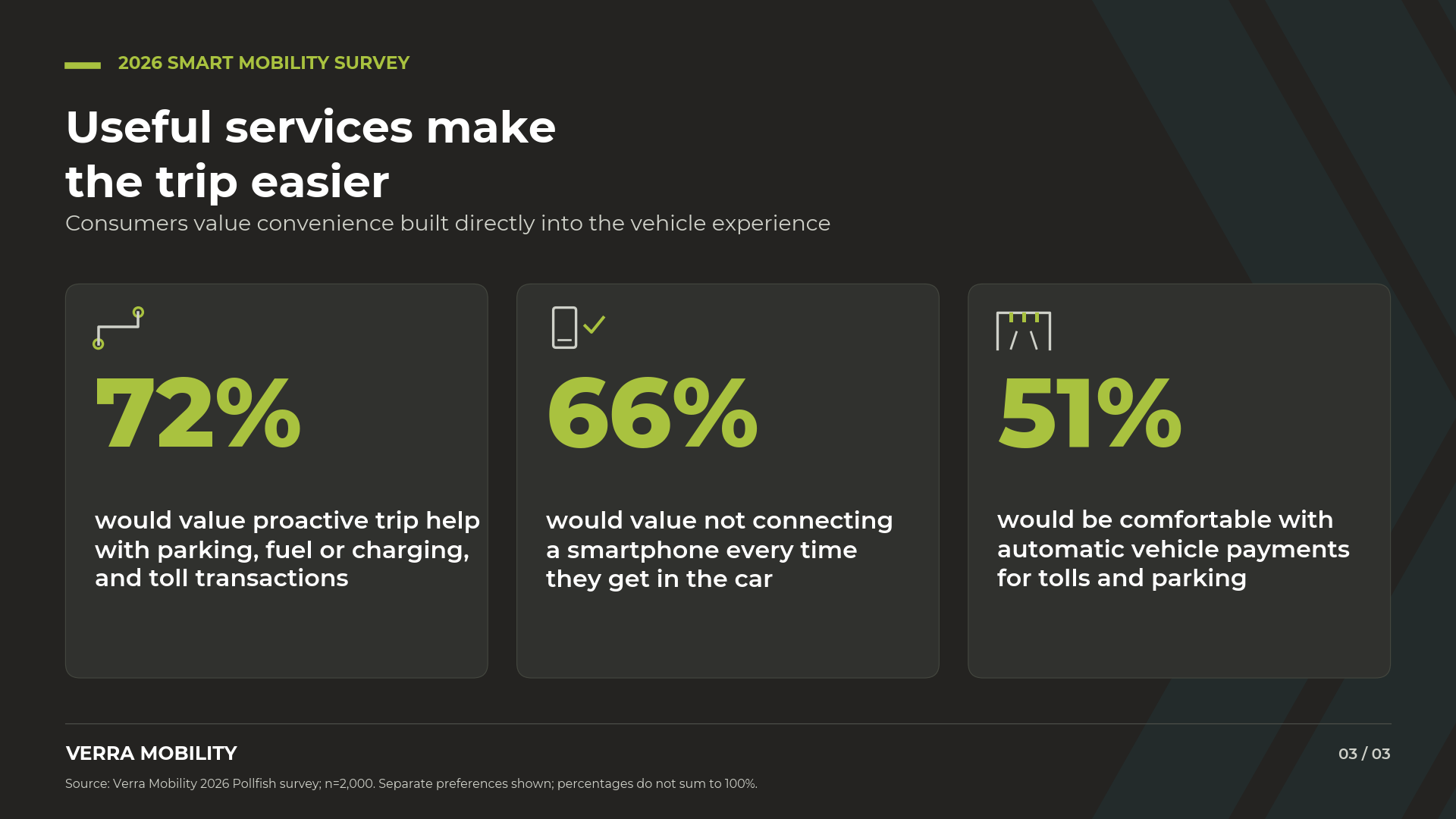
Automatic payments are one practical application: 51% would be comfortable with their vehicle automatically paying for tolls and parking. For OEMs and mobility-service providers, integrating these transactions into the vehicle experience offers a way to simplify routine parts of a trip.
Safety is another priority. When asked which service category was most appealing if cost were not a factor, respondents ranked safety first, followed by maintenance. Fifty-nine percent believe connected vehicles make driving safer.
Turning expectations into useful experiences
Taken together, the findings suggest that the next opportunity for connected vehicles lies in services drivers can readily understand and use. For OEMs, that means pairing embedded capabilities with practical benefits, straightforward enrollment and clear value.
Verra Mobility works within this ecosystem to address complex mobility payments, including tolling. As manufacturers shape their connected-service offerings, the survey provides a clearer view of the everyday experiences consumers want their vehicles to deliver.
Shape the Future of Digital Mobility
The industry is moving fast, and fleets need to keep pace. Let’s talk about how Verra Mobility can help you integrate smarter, connected solutions that keep drivers moving seamlessly in this new digital era.
Start the conversation today.
Post Topics
Related Posts
The Great Debate: Paying Upgrades for Connected Car Features vs. Subscription Flexibility
Read More about The Great Debate: Paying Upgrades for Connected Car Features vs. Subscription Flexibility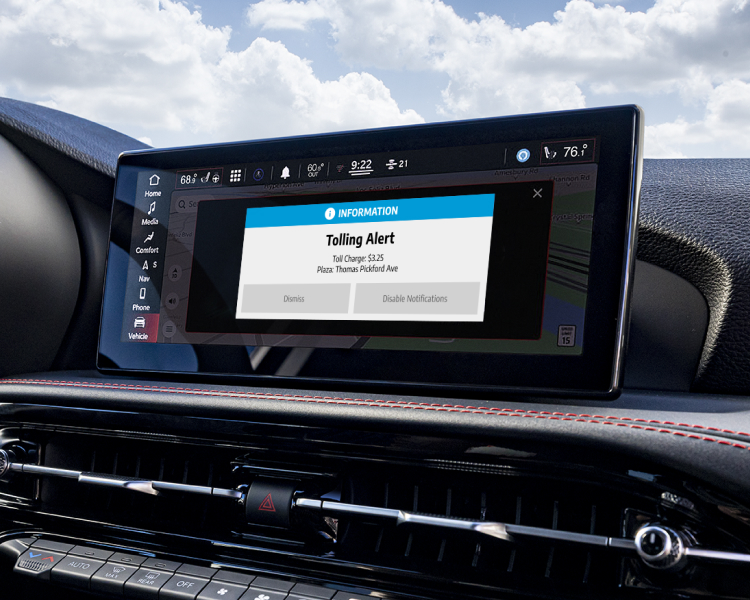
Verra Mobility launches AutoKinex for secure, in-vehicle payments
Read More about Verra Mobility launches AutoKinex for secure, in-vehicle payments