
Back-to-School Means More Traffic – It Doesn’t Have to Mean More Risk
July 1, 2026
Stop Today. Protect Tomorrow. National Stop on Red Week Serves as a Reminder That Choices Behind the Wheel Matter.
July 27, 2026
The start of a new school year brings excitement, new routines, and busier roads. As students head back to school, neighborhoods likely see more school buses, families walking to class, bicyclists, and increased traffic around schools.
Millions of students travel to and from school each day, and helping them get there safely is a shared responsibility. Drivers, parents, students, schools, and communities all play an important role in creating safer school zones and bus stops.
Parents are seeing the risks firsthand. In a recent Verra Mobility survey, 43% of parents and caregivers reported witnessing a near-miss involving a child in a school zone, and 37% have seen a vehicle pass a stopped school bus.
A few simple safety habits can make a big difference in helping students get to and from school safely. Consider the tips below to help your family prepare for a safe and successful school year.
Tips for Drivers:
In School Zones
Slow down
Reduced speed limits exist to protect students. Slowing down gives you more time to react if a child enters the road unexpectedly and helps reduce the severity of crashes.
Put distractions away
Keep your attention on the road. Avoid using your phone, eating, or engaging in other activities that take your eyes or mind off driving.
Expect the unexpected
Children can be difficult to see and may cross between parked cars or step into the street without warning. Stay alert near schools, crosswalks, neighborhoods, and drop-off areas.
Leave a little earlier
Back-to-school traffic often means longer travel times. Giving yourself a few extra minutes can help reduce the temptation to speed or drive aggressively.
Around School Buses
Never pass a stopped school bus
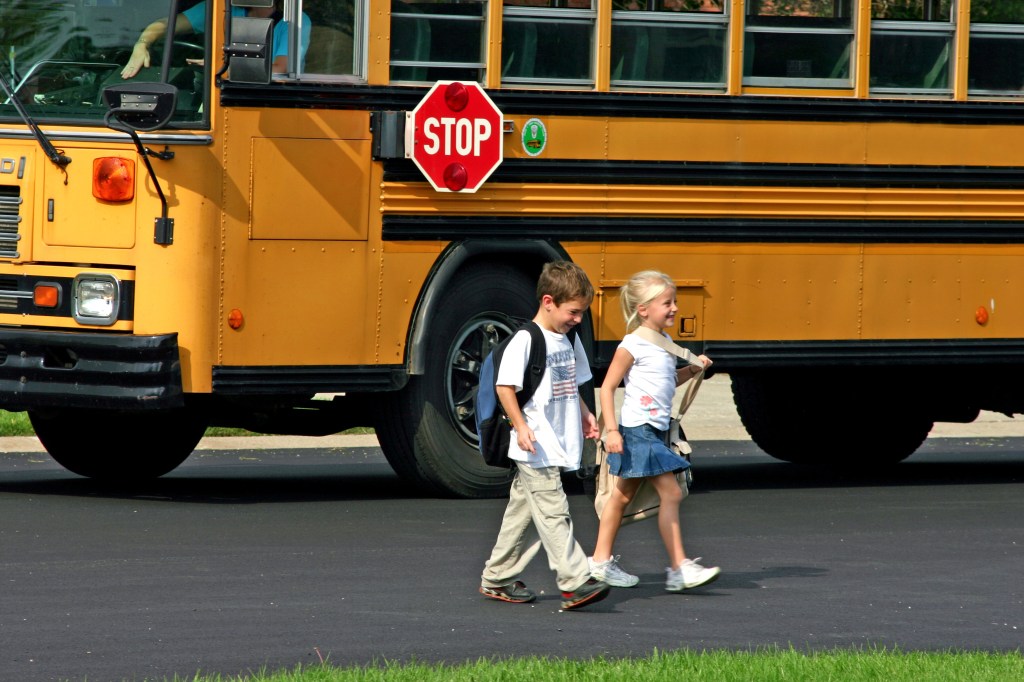
Passing a stopped school bus is illegal in every state. If a school bus has its red flashing lights activated and stop arm extended, stop and wait until the lights stop flashing and the stop arm is retracted. Children are most vulnerable to risk during this time while they are entering or exiting the bus.
Watch for children around the bus
Students may cross in front of or behind the bus or emerge from areas that are difficult to see. Always proceed with caution when a school bus is nearby.
Tips for Parents and Caregivers:
Arrive at the bus stop early
Plan to arrive at least five minutes before the bus is scheduled to arrive, so children aren’t rushing to catch it and are less likely to engage in reckless behavior.
Review bus stop expectations
Before the first day of school, talk with your child about staying away from the curb, how to cross the street when near a bus, and emphasize the importance of paying attention to traffic while waiting for the bus.
Walk the route together
If your child walks to school, practice the route together before school starts. Identify designated crosswalks, discuss safe crossing locations, and point out areas where extra caution is needed.
Model safe behavior
Children often learn by watching adults. Put your phone away while walking and driving, use crosswalks, and stay alert whenever you’re walking near traffic.
Keep distractions to a minimum
Encourage children to put away phones and remove headphones when walking to school or waiting for the bus to ensure they’re aware of their surroundings.

Tips For Students:
At the Bus Stop
Stay back from the curb
Stand at least five giant steps away from the curb or edge of the road while waiting for the bus.
Wait for the driver’s signal
Only approach or board the bus after the driver has signaled it’s safe.
Make eye contact when crossing the street
If you need to cross in front of the bus, make eye contact with the driver and wait for their signal before crossing.
In School Zones
Look left, right, then left again
Always stop and look both ways before crossing, even if you’re at a crosswalk.
Stay focused
Put away your phone and remove headphones while walking down busy roads so you can see and hear what’s happening around you.
Use crosswalks and listen to crossing guards
Cross only at designated crosswalks whenever possible and always follow the directions of crossing guards.
A Safer School Year Starts with All of Us
Ensuring students get to and from school safely is a shared responsibility. Whether you’re driving through a school zone, dropping off your child, waiting at the bus stop, or walking to school, your choices matter. By slowing down, staying alert, and looking out for one another, we can help make every trip to school safer.